
The BK117 and the Evolution of Air Medical Transport
A Helicopter That Changed the HEMS Mission
By the early 1980s, hospital-based helicopter emergency medical services were expanding rapidly across the United States. Programs had demonstrated the value of rapid helicopter transport using aircraft such as the Sud Aviation/SA 316 Alouette III, Bell 206 JetRanger and AS350/AStar family.
These helicopters helped establish the modern air-medical industry, but the mission was changing.
Flight crews were carrying increasingly sophisticated monitoring and life-support equipment. Programs wanted more room to work around critically ill patients, greater payload capacity and easier stretcher loading. Twin-engine capability was also increasingly attractive for operations involving hospitals, urban areas and rooftop helipads.
Into this environment came the MBB/Kawasaki BK117.
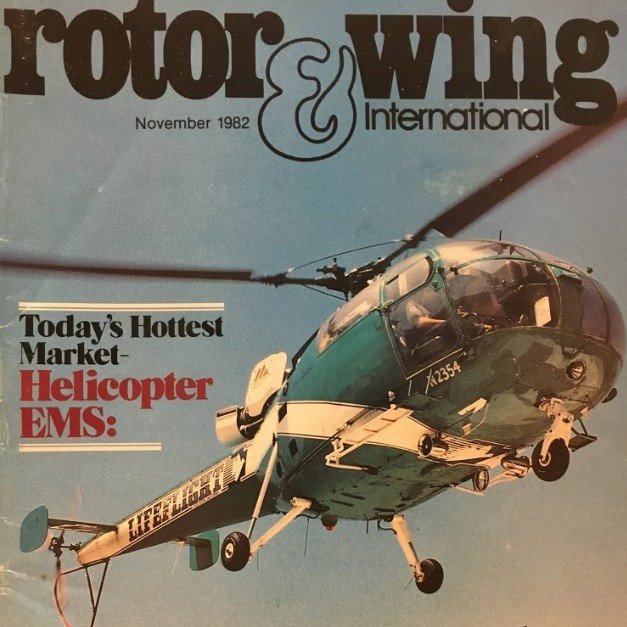
Alouette III — An Early EMS Workhorse
The Alouette III was widely used by the first generation of helicopter EMS programs. The importance of the Alouette III to the developing air-medical industry is reflected on this November 1982 cover devoted to the growing helicopter EMS market.
Rotor & Wing International, November 1982.
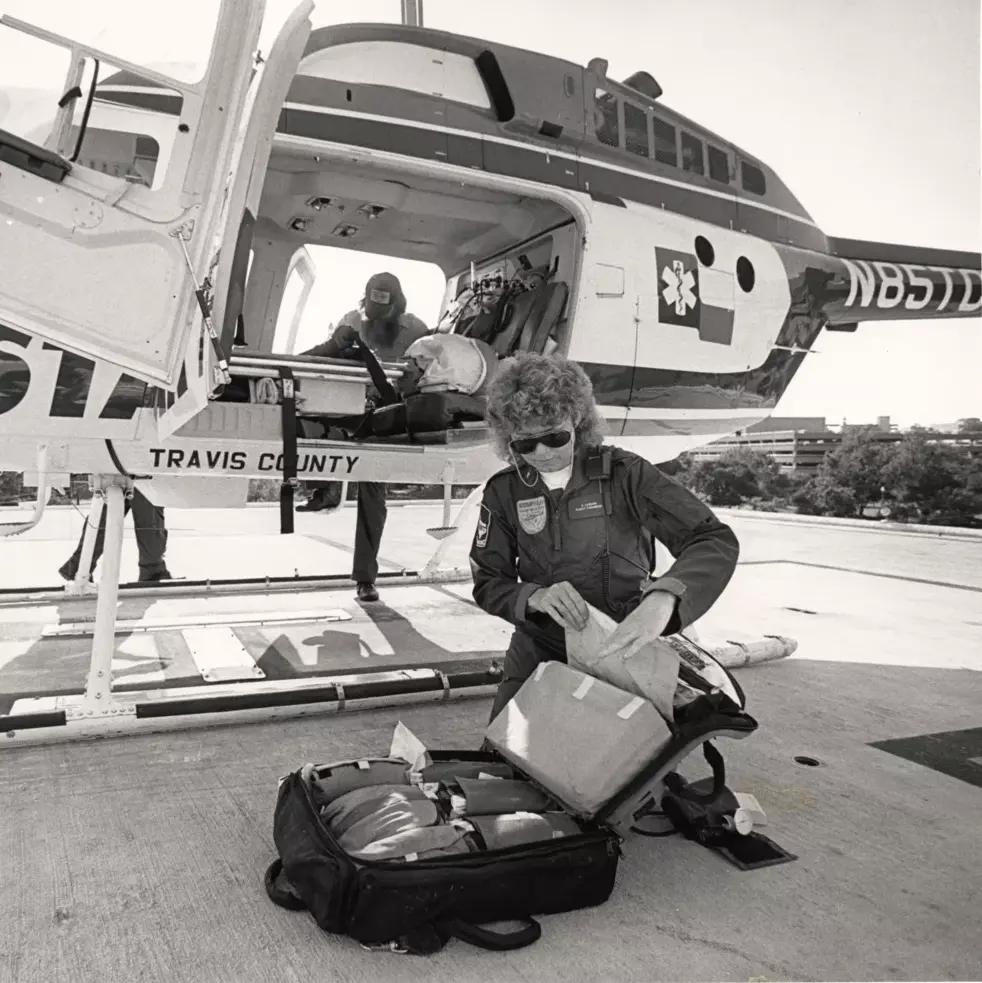
Bell 206 — Travis County EMS
The Bell 206 was widely adapted for early helicopter EMS operations. This Travis County aircraft illustrates the side-loading patient configuration typical of many early air-medical helicopters.
Photo: Travis County Archives.
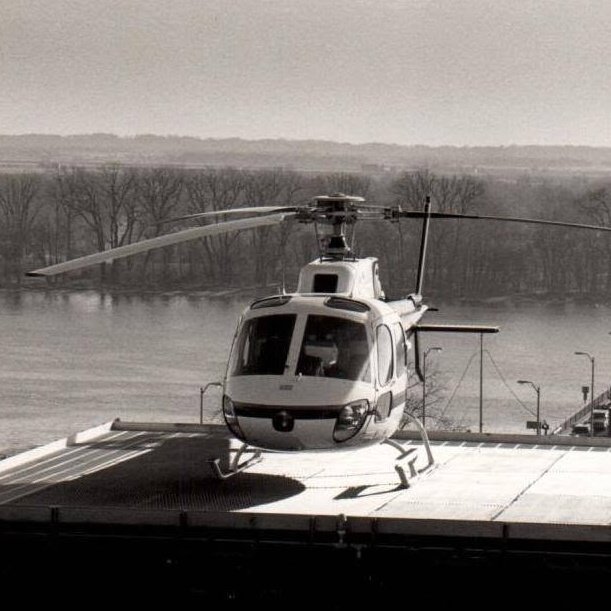
AS350 AStar — University of Iowa AirCare
AirCare 1 on the rooftop helipad at the former Burlington Medical Center in 1979. The AStar was among the light helicopters adapted to the rapidly expanding hospital-based air-medical mission.
Photo: University of Iowa AirCare.
What Made the BK117 Different?
When the BK117 entered the air-medical market in the early 1980s, it offered something significantly different from many of the helicopters then being used for patient transport.
Its large, relatively unobstructed cabin and flat floor gave medical crews more usable working space around the patient. Equipment could be carried without consuming as much of the space needed by the flight crew.
Most distinctive were the large rear clamshell doors. Instead of maneuvering a stretcher through a side cabin door, crews could load a patient directly through the rear of the helicopter.
The BK117 also combined this medical cabin with twin-engine capability and a relatively compact external footprint—an attractive combination for hospital helipads, rooftop operations and increasingly sophisticated critical-care missions.
THE BK117 DIFFERENCE
Rear Clamshell Doors
Straight-in stretcher loading through the rear of the aircraft.
Flat, Spacious Medical Cabin
A practical working environment with greater access to the patient and room for medical equipment.
Twin Engines
Additional redundancy for demanding hospital, urban and rooftop operations.
Compact Footprint
A capable medical cabin without requiring an exceptionally large helicopter.
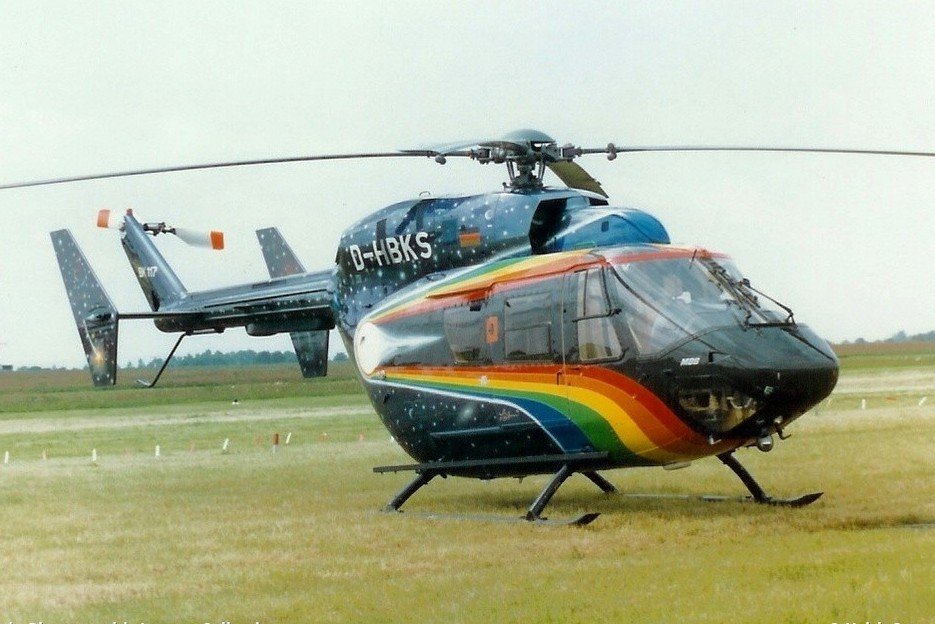
MBB BK117A-3 D-HBKS — C/N 7017, 1986
The MBB demonstrator in its distinctive Luigi Colani-designed “Space Ship” color scheme at the Hannover Air Show in June 1986.
Photo: Keith Sowter. Used with permission.
Why Was the BK117 Called the “Space Ship”?
When the BK117 began appearing in aviation publications in the early 1980s, MBB promoted one of its most important advantages with a memorable description: the “Space Ship.”
The name was more than futuristic marketing. The BK117 offered an unusually large and unobstructed cabin for a helicopter of its external dimensions. Contemporary promotional material emphasized approximately 200 cubic feet of usable space, along with rear and side access and the aircraft’s substantial useful load.
Those qualities were particularly valuable to the emerging air-medical industry. Instead of adapting a relatively small utility-helicopter cabin to carry a patient, medical crew and equipment, the BK117 provided considerably more room for increasingly sophisticated critical-care missions.
The “Space Ship” identity later received a spectacular visual interpretation. In 1986, German industrial designer Luigi Colani created the distinctive space-themed paint scheme shown here on D-HBKS, C/N 7017, an early-production BK117 retained by MBB as a demonstrator.
The dark blue aircraft, covered with stars and sweeping rainbow graphics, became one of the most recognizable BK117 demonstrators. But the “Space Ship” description itself was already being used years earlier, as the BK117 was first being introduced to the air-medical market.
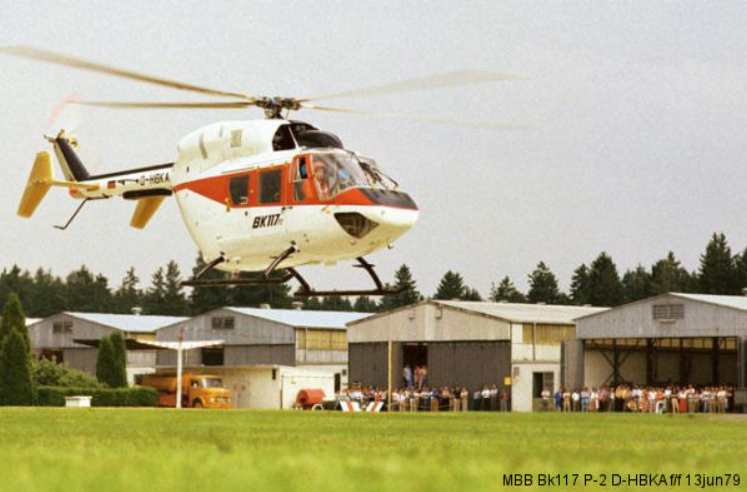
MBB BK117 P2 — D-HBKA
The German BK117 prototype during its first flight on June 13, 1979.
Photo: MBB factory photograph via Helis.com.
From Germany and Japan to the BK117
A Joint German-Japanese Helicopter
The BK117 was the product of an unusual international partnership between Messerschmitt-Bölkow-Blohm (MBB) of West Germany and Kawasaki Heavy Industries of Japan. The two manufacturers combined their experience to develop a new twin-engine utility helicopter aimed at both civil and government markets.
The formal cooperation agreement was signed on February 25, 1977, with development work divided between the two companies. MBB concentrated much of its experience in rotor systems and helicopter design, while Kawasaki contributed major portions of the airframe and transmission development.
The first German prototype flew at Ottobrunn on June 13, 1979, followed by a Japanese prototype at Gifu on August 10, 1979. Testing would eventually take the BK117 from extreme cold-weather conditions to high-altitude and hot-weather environments.
By 1982, the BK117 was moving from development into production. German-built aircraft carried construction numbers beginning with the 7000 series, while Kawasaki produced its own separate production sequence in Japan.
From Prototype to Production
Following the prototype flight program, the BK117 moved steadily toward production. On March 6, 1981, the first German pre-series aircraft made its initial flight, followed later that year by the first series-production aircraft from Kawasaki in Japan.
The German production line followed in 1982. BK117 C/N 7001 made its first flight on April 23, 1982, beginning the MBB-built production sequence that would soon supply aircraft to operators around the world.
Certification followed quickly. The BK117 received West German certification in December 1982, while MBB was already preparing the helicopter for the important American market.
One of the earliest German-built aircraft, C/N 7002, was sent to MBB Helicopter Corporation in Pennsylvania. It became an important U.S. demonstration and certification aircraft and helped introduce the BK117 to American operators.
C/N 7002 would eventually find its way into the air-medical role the BK117 was becoming famous for. In 1990, the aircraft joined Geisinger Life Flight, arriving in Danville, PA as N39180, eventually changing to N122LF—giving this early-production BK117 a direct connection to one of the pioneering U.S. hospital-based helicopter programs.
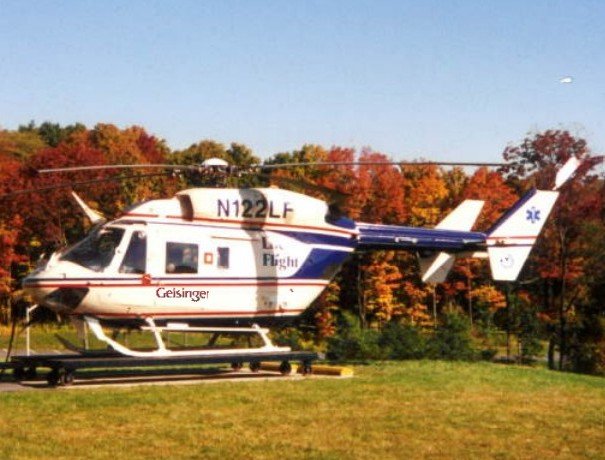
BK117 C/N 7002 — N122LF
One of the earliest German-built BK117s later served with Geisinger Life Flight as N122LF. Earlier in its career, C/N 7002 had been used by MBB during the BK117’s introduction and certification in the United States.
Photo: Roger Buck.
The BK117 Comes to America
MBB Helicopter Corporation — West Chester, Pennsylvania
The United States was an important early market for the BK117. MBB’s American subsidiary, MBB Helicopter Corporation, operated from West Chester, Pennsylvania, adjacent to Brandywine Airport, and became the focal point for introducing and supporting the new helicopter in the United States.
One of the earliest German-built BK117s, C/N 7002, was delivered to MBB Helicopter Corporation in November 1982. The aircraft became an important demonstrator and was used during the BK117’s American certification program.
In early 1983, C/N 7002 participated in high-altitude testing at Leadville, Colorado, helping demonstrate the aircraft’s performance under demanding conditions.
On March 29, 1983, the BK117 received its FAA certification, clearing the way for deliveries to American operators. The certification was an important milestone for a helicopter that would soon find one of its most significant U.S. markets in hospital-based emergency medical services.
MBB Helicopter Corporation — U.S. BK117 Advertising
Period MBB advertising promoted the BK117 as the “Space Ship” alongside the company’s established BO105. MBB Helicopter Corporation, based in West Chester, Pennsylvania, served as MBB’s U.S. helicopter subsidiary.

The BK117 Enters Air Medical Service
MedSTAR — Washington Hospital Center
C/N 7003 | N39181 | U.S. Jet Aviation
In 1983, Washington Hospital Center’s MedSTAR became one of the first air-medical programs anywhere to place the new BK117 into operational service.
MedSTAR later recorded its first official patient flight on July 3, 1983, transporting a spinal-cord-injury patient from Prince William County, Virginia, to Washington Hospital Center.
Contemporary newspaper reporting independently confirms the BK117 was carrying patients by July 12, 1983, and photographs from August show N39181 in MedSTAR service.
The aircraft was operated through U.S. Jet Aviation, which provided the helicopter and aviation support while Washington Hospital Center supplied the medical crews and clinical program. This reflected a model that became increasingly common as HEMS expanded during the 1980s.
Documented first official patient flight: July 3, 1983
Geisinger Life Flight — Danville, Pennsylvania
C/N 7013 | N117LF | Omniflight
Geisinger Life Flight selected the BK117 as the next generation of aircraft for its growing air-medical program. The aircraft was prepared for service through MBB’s operation at West Chester, Pennsylvania, and aviation services were provided by Omniflight.
According to oral history from individuals involved with the early Geisinger program, Evergreen Helicopters was initially considered as an aviation provider. Evergreen reportedly had a BK117 available, but the aircraft was white, while Geisinger wanted a helicopter finished in the program’s distinctive tan-and-brown color scheme. Geisinger ultimately selected Omniflight, which obtained and prepared the BK117 that became N117LF, C/N 7013.
N117LF arrived at Geisinger in late December 1983. A contemporary newspaper photograph later documented that the new helicopter flew its first patient to Geisinger on January 7, 1984.
Documented first patient flight: January 7, 1984
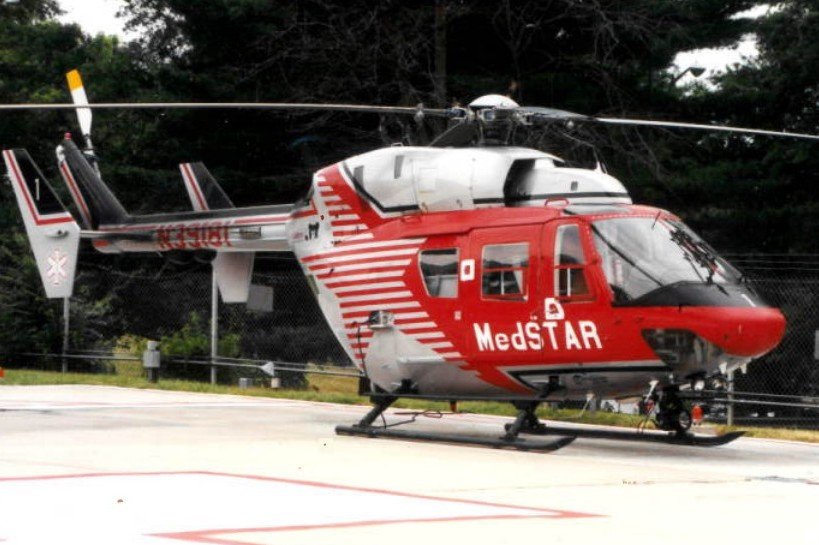
MedSTAR BK117 — N39181, C/N 7003
Washington Hospital Center
Photo: Stacey L Howell.
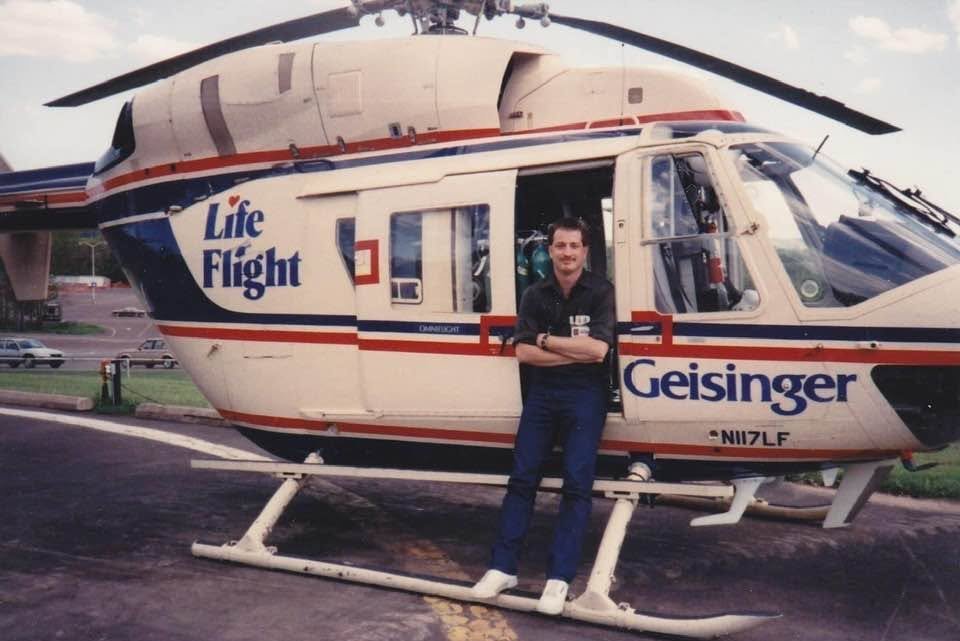
Geisinger Life Flight BK117 — N117LF, C/N 7013
Geisinger Medical Center, Danville, Pennsylvania
Photo: Roger Buck.
WHO WAS FIRST?
Determining which hospital-based program was the first to operate a BK117 is more complicated than some historical accounts suggest.
MedSTAR’s N39181, C/N 7003, was carrying patients in July 1983. MedSTAR records identify July 3, 1983 as its first official patient flight, and contemporary newspaper reporting independently documents another MedSTAR patient transport on July 12.
Geisinger, however, was described in contemporary 1983–84 newspaper reports as operating the “first” hospital-based BK117, or the first BK117 in a hospital-based emergency service with its particular medical configuration. Geisinger’s N117LF, C/N 7013, flew its first documented patient on January 7, 1984.
Interestingly, a 1989 Geisinger newspaper retrospective described Geisinger as “the second hospital-based program in the country to use BK-117s.”
RotorPedia therefore distinguishes between historical claims of being “first” and documented operational dates. Based on the evidence located so far, MedSTAR entered documented patient service with a BK117 before Geisinger.
The First 10 German-Built BK117s in Air Medical Service
Reconstructing the earliest BK117 air-medical fleet requires more than following aircraft construction numbers. Helicopters were built, demonstrated, registered and delivered at different times—and some early aircraft did not immediately enter patient service.
RotorPedia therefore ranks these aircraft by the earliest documented date they entered operational air-medical service, preferably using a first-patient flight when one can be established.
The chronology below is limited to the German/MBB-built BK117 production sequence. Kawasaki-built aircraft from the separate Japanese production line are not included.
#1 — MedSTAR
Washington Hospital Center — Washington, D.C.
BK117A-1 | C/N 7003 | N39181
Aviation operator: U.S. Jet Aviation
First official patient flight: July 3, 1983
MedSTAR’s BK117 became the earliest German-built BK117 that RotorPedia has documented entering operational air-medical service.
MedSTAR records identify July 3, 1983 as the aircraft’s first official patient flight, transporting a patient with a spinal-cord injury from Prince William County, Virginia, to Washington Hospital Center.
Contemporary evidence supports the early date. On July 12, 1983, MedSTAR transported an injured pilot from Fauquier Hospital to Washington Hospital Center following an airplane crash near Remington, Virginia. By August, contemporary newspaper photographs clearly show N39181 operating with MedSTAR.
The aircraft was provided through U.S. Jet Aviation, which supplied aviation support while Washington Hospital Center provided the medical program.
Evidence status: Confirmed — first official patient flight reported as July 3, 1983; contemporary patient transport independently documented July 12, 1983.
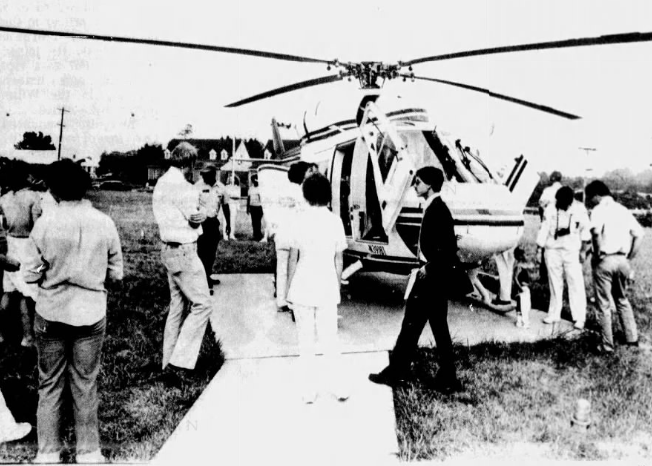
MedSTAR BK117 — 1983
Washington Hospital Center’s MedSTAR BK117 during a demonstration at Culpeper Memorial Hospital.
Culpeper Star-Exponent, August 30, 1983.
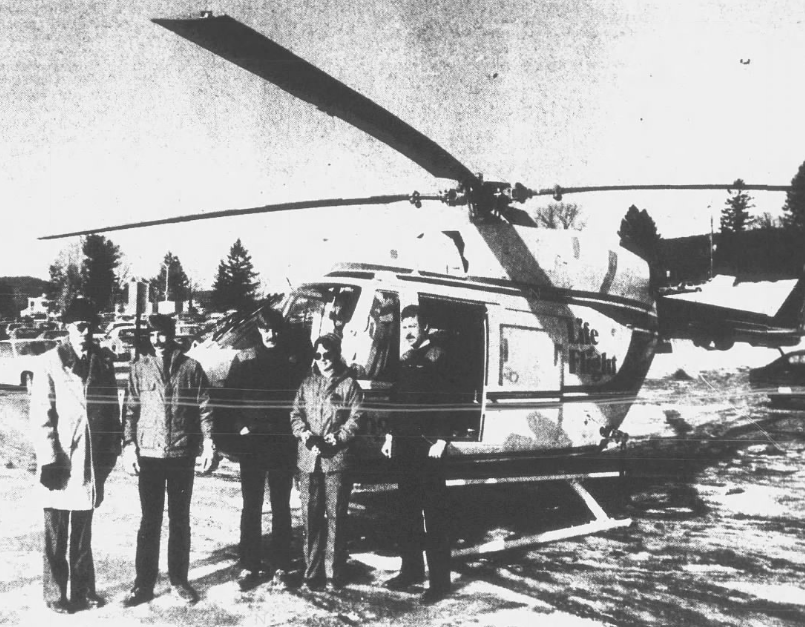
Geisinger Life Flight BK117 N117LF — December 1983
Geisinger’s new BK117 shortly after its arrival at Geisinger Medical Center. From left: Jim Smith; pilots Kevin and Duane Dillingham; Marie Hunsinger, Life Flight nurse; and Mike Dwyer, pilot.
The Danville News, December 30, 1983.
#2 — Geisinger Life Flight
Geisinger Medical Center — Danville, Pennsylvania
BK117A-1 | C/N 7013 | N117LF
Aviation operator: Omniflight
First patient flight: January 7, 1984
Geisinger Life Flight became the second program in RotorPedia’s reconstructed chronology to place a German-built BK117 into documented air-medical patient service.
N117LF arrived at Geisinger in late December 1983 following preparation for service. Pilots and crews then completed the training necessary to place the new aircraft into operation.
A contemporary Danville News photograph and caption provide unusually precise evidence for the aircraft’s entry into service, reporting that the new helicopter “flew its first patient to Geisinger on Jan. 7.”
The aircraft was provided through Omniflight, beginning a long association between the aviation company and Geisinger’s Life Flight program. The BK117 would subsequently become one of the aircraft types most closely associated with Geisinger’s air-medical operation.
Evidence status: Confirmed — contemporary newspaper documentation identifies January 7, 1984 as N117LF’s first patient flight.
#3 — Christoph 1
ADAC Luftrettung — Munich, West Germany
BK117A-1 | C/N 7005 | D-HDAC
Operator: ADAC
Entered air-rescue service: February 3, 1984
Germany’s ADAC became one of the earliest air-rescue organizations to place the BK117 into operational medical service.
D-HDAC, C/N 7005, was originally produced as a BK117A-1 and delivered to ADAC in 1983. Before entering regular rescue service, the aircraft was returned to MBB and upgraded to the BK117A-3 configuration.
On February 3, 1984, D-HDAC was placed into service as Christoph 1, replacing the Bundeswehr UH-1D that had previously supported the Munich rescue-helicopter operation.
The introduction of the BK117 at Christoph 1 was an important early European milestone for the type and demonstrated that the aircraft’s spacious cabin, rear loading doors and twin-engine configuration were well suited to dedicated helicopter emergency medical operations.
Evidence status: Confirmed — D-HDAC, C/N 7005, documented as entering service as Christoph 1 on February 3, 1984. Exact first-patient flight has not been established
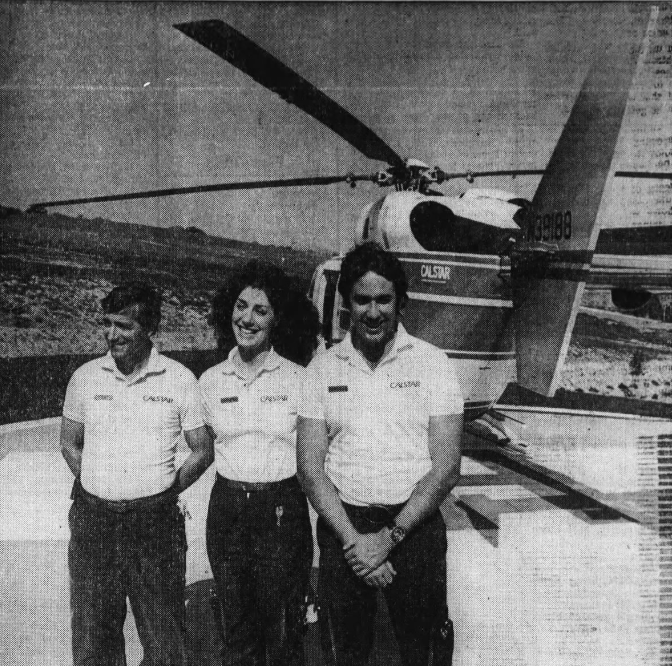
CALSTAR BK117 — N39188
With its flight crew. From left: pilot Barry Lloyd and nurses Terrie Gordon Gamble and Andy Swartzey. The aircraft was based at John Muir Emergi-Center in San Ramon and served the San Francisco Bay Area.
Oakland Tribune, March 6, 1985, p. 64.
#4 — CALSTAR
California Shock Trauma Air Rescue — Northern California
BK117A-1 | C/N 7011 | N39188
Aviation operator: Helicopter Air Transports
Reported operational start: June 1984
California Shock Trauma Air Rescue—better known as CALSTAR—was among the earliest U.S. air-medical programs to operate the BK117.
CALSTAR’s early aircraft was N39188, C/N 7011, a German-built BK117A-1 operated under contract with Helicopter Air Transports.
A later CALSTAR history dates the beginning of its BK117 operation to June 1984. Contemporary newspaper reporting independently documents CALSTAR’s expanding BK117 operation by August 1984, when the organization was establishing service for hospitals in the San Francisco Bay Area and Northern California.
Because an exact first-patient flight has not yet been located in contemporary records, RotorPedia treats June 1984 as the reported operational start, while distinguishing that retrospective date from the independently documented August 1984 newspaper evidence.
Evidence status: Probable — CALSTAR retrospectively dates its BK117 operation to June 1984; contemporary newspaper evidence confirms BK117 air-medical operations by August 1984. Exact first-patient date remains unresolved.
#5 — Pegasus
University of Virginia Medical Center — Charlottesville, Virginia
BK117A-1 | C/N 7022 | N117UV
Aviation operator: U.S. Jet Aviation
First patient flight: August 31, 1984
The University of Virginia Medical Center launched its Pegasus air-medical service in 1984 using a German-built BK117 supplied through U.S. Jet Aviation.
The aircraft, N117UV, C/N 7022, arrived in Charlottesville in August while pilots and medical crews completed training and preparations for the new service.
Contemporary newspaper reporting announced that Pegasus would begin operations on August 31, 1984. Within its first week, the new service had already transported eight patients, providing strong contemporary confirmation that the BK117 had entered active patient service.
Just two days before operations began, The Daily Progress published a photograph of the new Pegasus BK117 and announced that the airborne emergency medical service would begin on Friday, August 31. Subsequent reporting documented that Pegasus had transported eight patients during its first week of operation.
Evidence status: Confirmed — contemporary newspaper reporting documents Pegasus beginning service August 31, 1984, with eight patients transported during its first week.
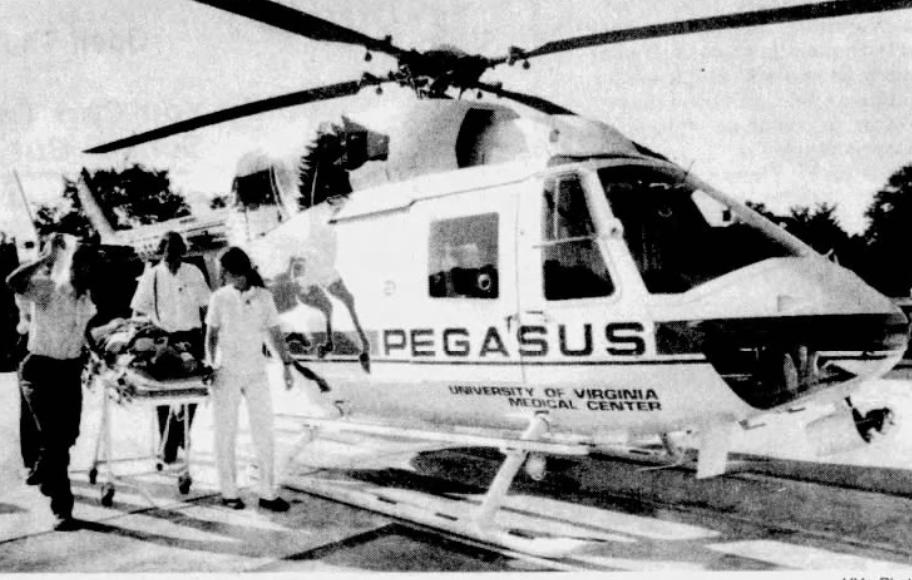
Pegasus BK117 — N117UV
The University of Virginia Medical Center’s new Pegasus BK117 shortly before the program began air-medical service on August 31, 1984.
The Daily Progress, August 29, 1984, p. 15. UVa Photo.
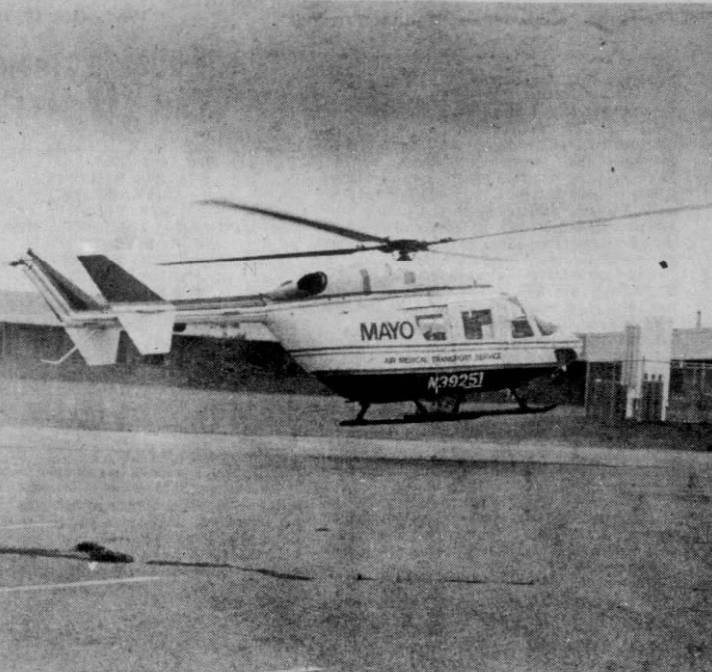
Mayo One BK117 — N39251
Mayo Medical Center’s BK117, N39251, during the opening days of Mayo One’s air-medical service. The program received its first actual patient assignment on October 9, 1984.
The Dunn County News, October 10, 1984, p. 12.
#6 — Mayo One
Mayo Medical Center / St. Marys Hospital — Rochester, Minnesota
BK117A-1 | C/N 7023 | N39251
Aviation operator: Omniflight
First patient flight: October 9, 1984
Mayo Medical Center introduced Mayo One in October 1984, adding helicopter critical-care transport to the medical services available through Mayo and St. Marys Hospital in Rochester.
The aircraft, N39251, C/N 7023, was a German-built BK117A-1 leased through Omniflight of Janesville, Wisconsin, which provided the helicopter and aviation support for the new program.
Mayo One was formally inaugurated on October 8, 1984. The following day, while the helicopter was on a familiarization flight in Wisconsin, the crew received its first actual patient assignment, establishing October 9, 1984 as the program’s first documented patient mission.
Contemporary reporting from September 1984 described the BK117 as a “space ship,” echoing the terminology already being used to promote the aircraft’s unusually spacious medical cabin.
Evidence status: Confirmed — Mayo One was inaugurated October 8, 1984, and received its first actual patient assignment on October 9, 1984.
#7 — Christoph 26
ADAC Luftrettung — Sande, West Germany
BK117A-1 | C/N 7016 | D-HMUZ
Operator: ADAC
Entered air-rescue service: May 3, 1985
ADAC expanded its use of the BK117 in 1985 when D-HMUZ, C/N 7016, entered service as Christoph 26 at Sande in northern West Germany.
The Christoph 26 rescue-helicopter station had been operated by ADAC since February 1, 1983, initially using a BO105. On May 3, 1985, the BK117 replaced the smaller aircraft and became ADAC’s second BK117 assigned to an operational rescue-helicopter station.
D-HMUZ had previously served as an MBB factory aircraft and was reportedly used for evaluation before entering rescue service.
Its time at Christoph 26 was brief. On August 23, 1985, the aircraft was destroyed following a technical problem and fire after landing. No injuries were reported. A BO105 temporarily returned to the station until another BK117 could be provided.
Evidence status: Confirmed — D-HMUZ, C/N 7016, documented as entering service as Christoph 26 on May 3, 1985. Exact first-patient flight has not been established.
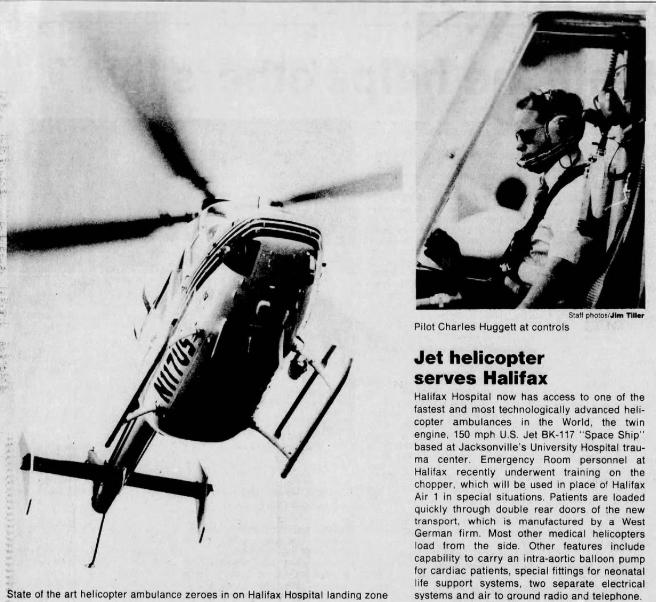
Trauma One BK117 — N117US
Trauma One’s BK117, N117US, during a visit to Halifax Hospital. Inset: pilot Charles Huggett at the controls.
The Daytona Beach News-Journal, July 1, 1985, p. 4. Staff photos by Jim Tiller.
#8 — Trauma One
University Hospital — Jacksonville, Florida
BK117A-1 | C/N 7024 | N117US
Aviation operator: U.S. Jet Aviation
Entered air-medical service: June 10, 1985
University Hospital in Jacksonville introduced its Trauma One helicopter service in June 1985 using N117US, C/N 7024, a German-built BK117A-1.
The aviation side of the program was provided by U.S. Jet Aviation, which owned the helicopter and supplied pilots, maintenance and other aviation services. University Hospital provided the medical personnel and clinical operation.
Contemporary reporting documents that Trauma One began operating on June 10, 1985. By June 18, the new service had already completed eight flights, including an on-scene response to an accident.
The Jacksonville program was another early example of the BK117 being selected specifically for the rapidly developing hospital-based critical-care transport mission.
Evidence status: Confirmed — contemporary newspaper reporting documents Trauma One beginning operations June 10, 1985. An exact first-patient flight has not yet been established.
#9 — LIFE STAR
Hartford Hospital — Hartford, Connecticut
BK117A-1 | C/N 7015 | N117HH
Aviation operator: Rocky Mountain Helicopters
First patient mission: June 18, 1985
Hartford Hospital inaugurated its LIFE STAR helicopter program in June 1985, becoming another early U.S. air-medical program to select the BK117.
The aircraft, N117HH, C/N 7015, was a German-built BK117A-1 operated with aviation services provided by Rocky Mountain Helicopters.
LIFE STAR was formally inaugurated on June 17, 1985. The following day, the program flew its first patient mission, responding to a motor-vehicle accident on Route 44 in Canton, Connecticut.
The program would go on to become one of New England’s long-running critical-care helicopter services, but its beginnings can be traced precisely to those first two days of operation in June 1985.
Evidence status: Confirmed — LIFE STAR was inaugurated June 17, 1985, and flew its first patient mission on June 18, 1985.
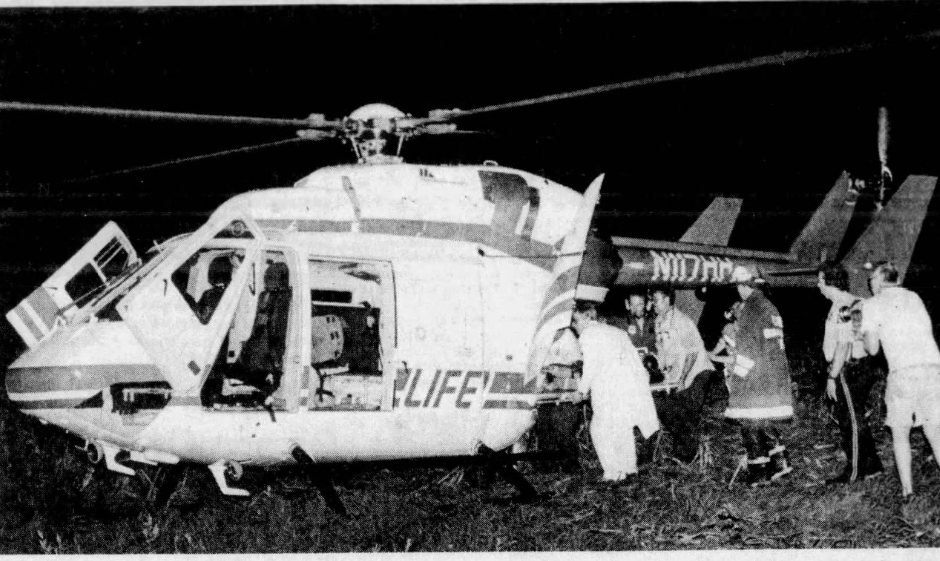
Hartford Hospital LIFE STAR — N117HH
Hartford Hospital’s LIFE STAR BK117, N117HH, loading an accident victim during an early patient mission.
The Republican, September 10, 1985, p. 25. Photo by Norm Roy.
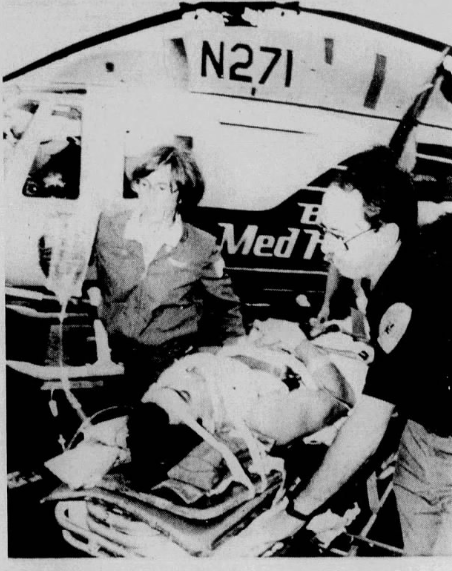
New England Life Flight / MedFlight BK117 — N271
Emergency medical technicians transfer Douglas Carrier, 24, of Fall River from N271 to a waiting ambulance for transport to Massachusetts General Hospital. The newspaper described the mission as one of the first transports made with the program’s new helicopter.
Daily Hampshire Gazette, June 29, 1985, p. 5. AP photo.
#10 — New England Life Flight
New England Life Flight — Boston, Massachusetts
BK117A-1 | C/N 7020 | N271
First patient flight: June 26, 1985
New England Life Flight entered the BK117 era in June 1985 with N271, C/N 7020, completing RotorPedia’s reconstructed list of the first ten German-built BK117s documented in air-medical service.
The program’s first patient flight occurred on June 26, 1985, when the helicopter transported a 14-year-old boy who had suffered serious injuries in an explosion.
Just three days after the program’s documented first patient flight, contemporary newspaper coverage showed N271 actively transporting a patient. The June 29 report described the mission as one of the first transports made with the new helicopter, providing unusually strong contemporary evidence for the aircraft’s June 1985 entry into service.
New England Life Flight would later evolve into what became Boston MedFlight, but N271’s June 1985 entry into patient service places the program among the earliest BK117 air-medical operators.
Evidence status: Confirmed — first patient flight documented June 26, 1985. Contemporary newspaper photography documents N271 performing a patient transport during the same week.
From the BK117 to a New Generation
The BK117 arrived at a formative moment in the history of helicopter emergency medical services. Programs were no longer looking simply for a helicopter capable of carrying a patient. Increasingly, they needed an aircraft that could function as a flying critical-care environment.
The BK117 proved particularly well suited to that changing mission. Its twin-engine configuration, spacious cabin, flat floor, large side doors and rear clamshell doors gave medical crews an unusually practical environment in which to load, transport and care for critically ill and injured patients.
As helicopter EMS expanded through the 1990s and 2000s, newer aircraft incorporated more powerful engines, quieter rotor systems, modern avionics, improved autopilots and increasingly sophisticated medical interiors. But many of the characteristics that made the BK117 attractive to the first generation of operators remained important.
One of the most successful aircraft of the next generation was the EC135, later renamed the H135. Although the H135 was not developed from the BK117, it became enormously successful in the same mission. Airbus reported in 2024 that more than 700 H135s were being used for emergency medical missions worldwide, making the type a global leader in HEMS.
The connection to the EC145 and today’s H145 is much more direct. The EC145 was developed as an evolution of the BK117 family, retaining the basic concept of a compact twin-engine helicopter with a large cabin and rear clamshell doors while introducing a larger cabin, increased useful load and newer technology. Airbus today describes the H145 specifically as a further evolution of the BK117 family.
That family has continued to grow. In 2024, Kawasaki and Airbus marked delivery of the 2,000th BK117-family helicopter worldwide. The milestone includes the later EC145/H145 generations that evolved from the original BK117, illustrating just how far the original MBB/Kawasaki design concept ultimately progressed.
The BK117 therefore represents more than another aircraft type in the history of air medical transport. It helped demonstrate the value of designing a helicopter around the needs of the medical crew and patient—a philosophy that continues in modern HEMS aircraft more than four decades later.
BK117 — The Pioneer
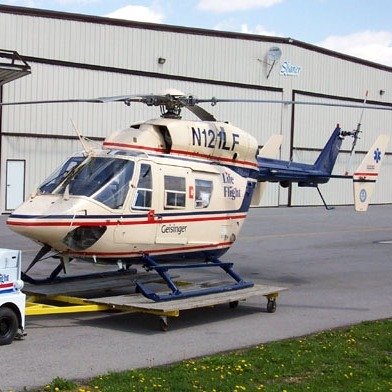
Geisinger Life Flight BK117. A new approach to the air-medical cabin in the early 1980s.
Photo: Roger Buck.
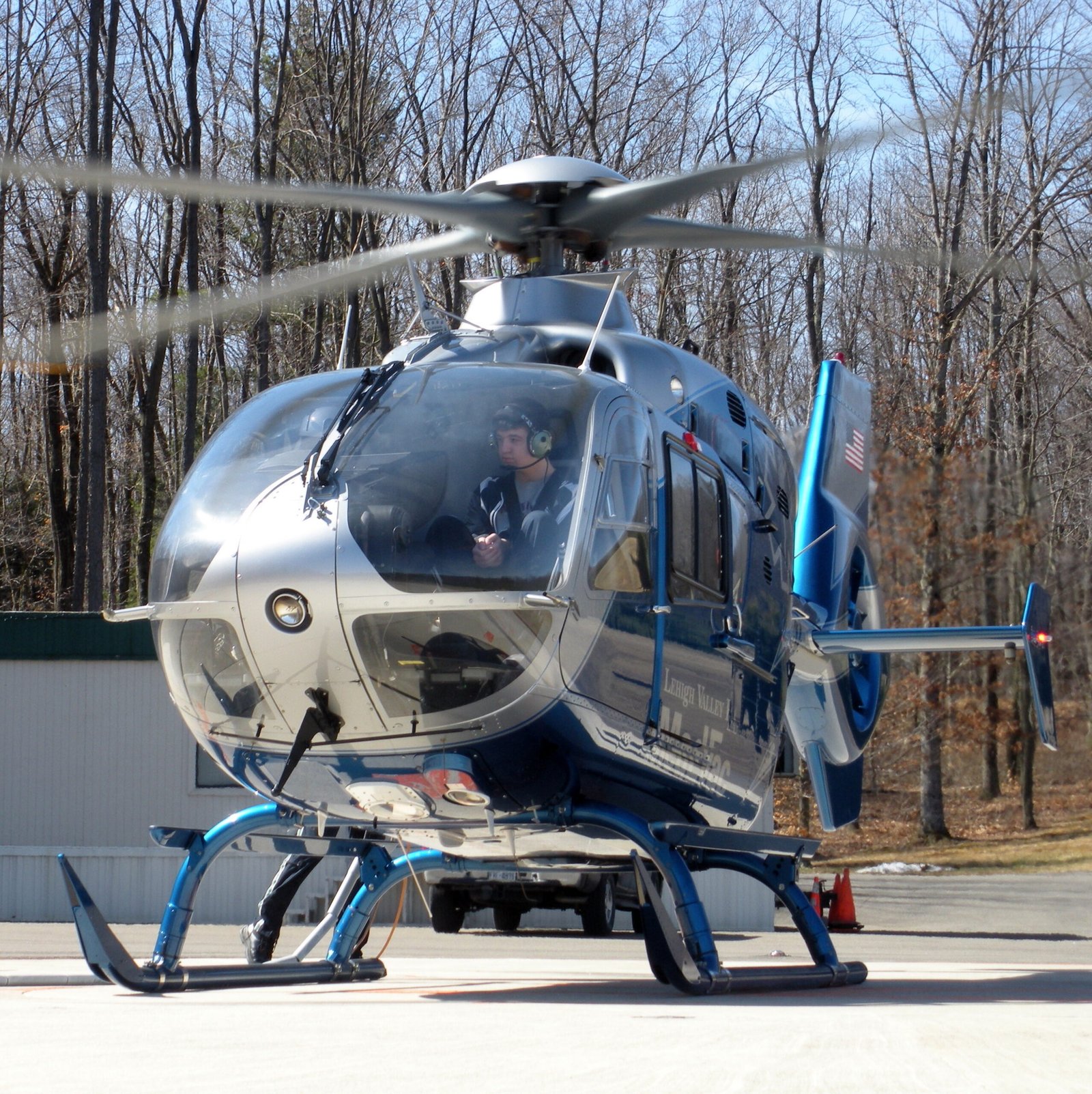
EC135 / H135 — A New Generation
A modern light twin that became one of the world’s most widely used HEMS helicopters.
Photo: Roger Buck.
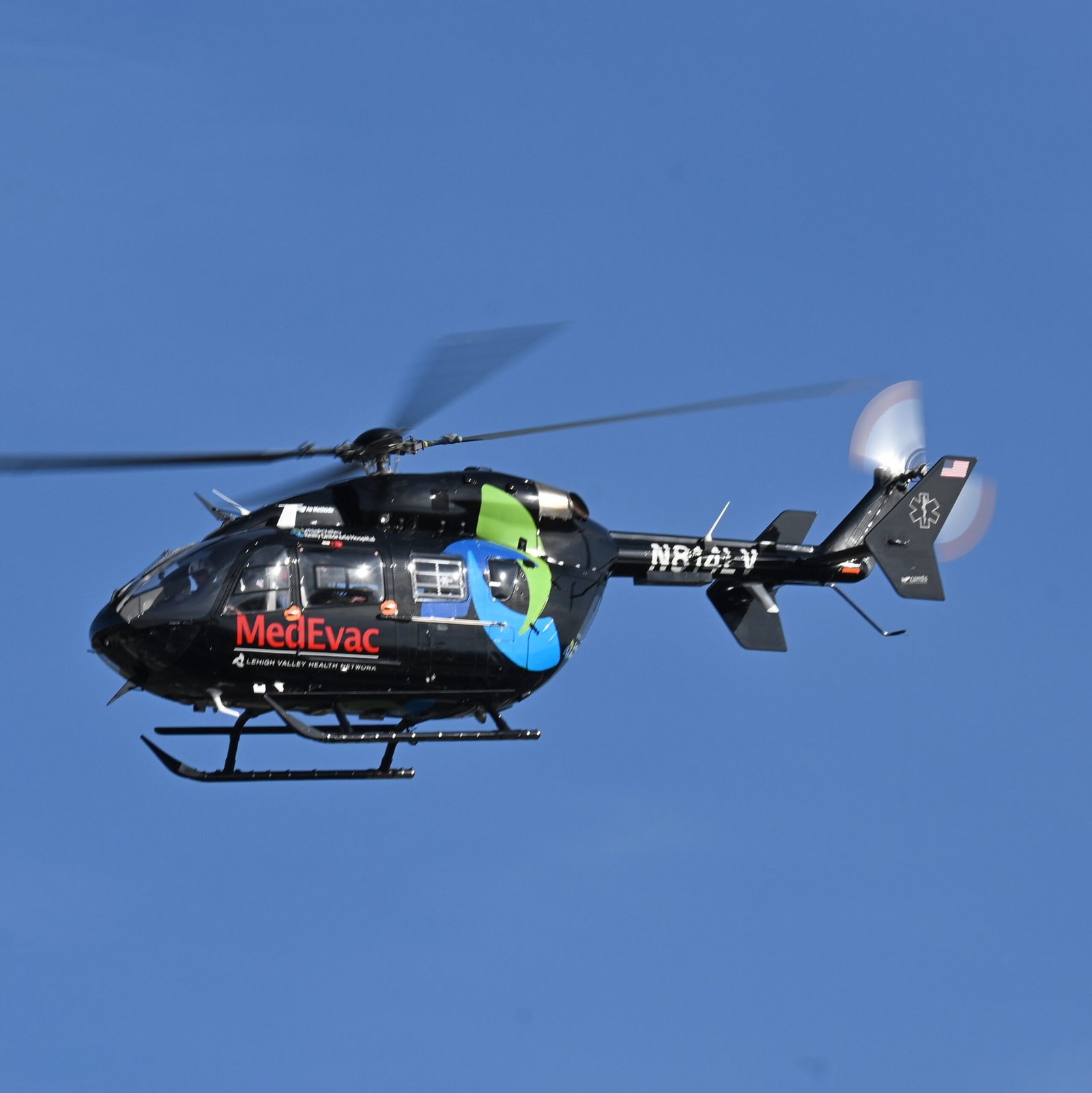
EC145 / H145 — The Lineage Continues
The direct descendant of the BK117 carries its basic air-medical design into a new generation.
Photo: Roger Buck.
A LEGACY THAT CONTINUES
From the first BK117 air-medical missions of the early 1980s to today’s H135 and H145 fleets, helicopter EMS has evolved dramatically. Aircraft are more powerful, quieter and increasingly sophisticated, but the fundamental mission remains unchanged: bringing advanced medical care to the patient and transporting that patient rapidly and safely to the care they need.
The BK117 helped shape how that mission would be accomplished.